How to Play Guide
Master the game interface, rules, and features before applying advanced strategies.
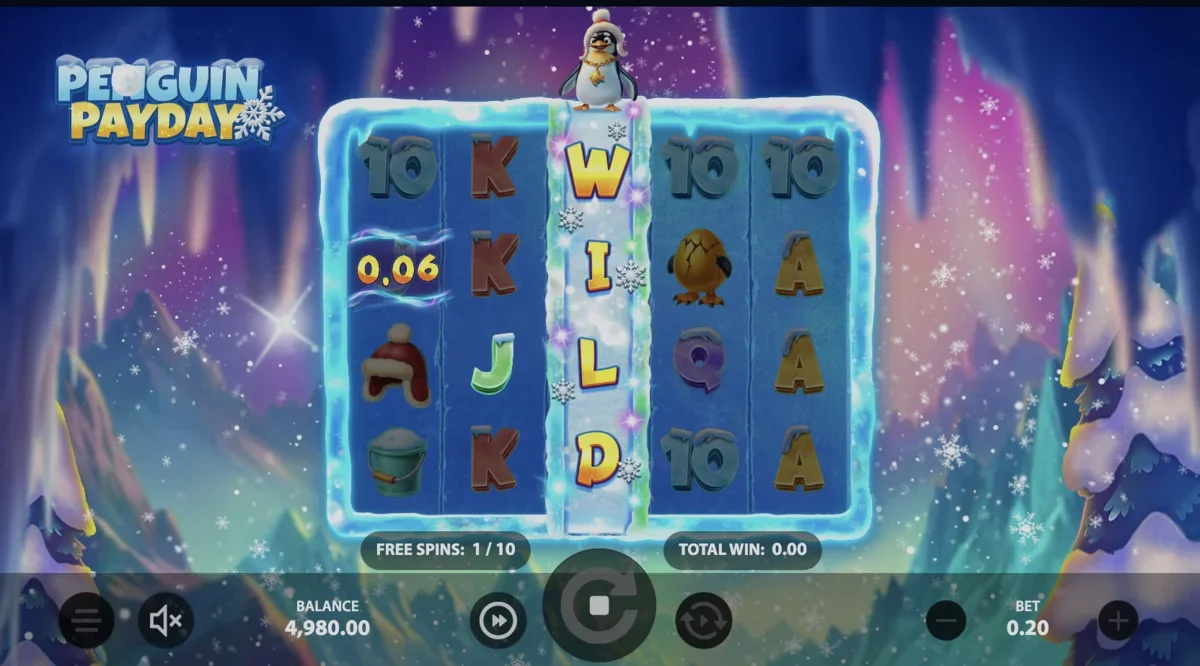
Expert strategies for managing high volatility, maximizing playtime, and understanding the math behind Penguin Payday.
The mathematical house edge of 3.99% means that over time, the casino will always profit. The strategies below are about managing variance and extending playtime, not guaranteeing wins.
Never gamble money you can't afford to lose. These tactics help manage risk, not eliminate it.
96.01% RTP means for every €100 wagered, the game returns €96.01 on average. The remaining €3.99 is the house edge. For a complete breakdown of RTP and game mechanics, see our main review page.
What this means in practice:
If you wager €1,000 over a session, you can expect to lose approximately €40 on average (€1,000 × 3.99% = €39.90). This is the mathematical expectation—not a guarantee for any single session.
Why variance matters:
In one session, you might win €200. In another, you might lose €200. The RTP only applies over thousands of spins. Short-term results are completely random. Understanding volatility is crucial—practice in our free demo mode to experience this firsthand.
House Edge = 100% - RTP
House Edge = 100% - 96.01% = 3.99%
This 3.99% is the casino's built-in advantage. No strategy can overcome this long-term. Strategies can only help you:
Variance measures how much results deviate from the expected value. Penguin Payday has very high variance, meaning:
Example: Expected loss on €100 wagered is €3.99. But in reality, you might win €50 or lose €50 in a single session. The variance is extreme.
This is the gambler's fallacy. Each spin is independent—previous results don't affect future outcomes.
Common misconception: "I've lost 20 spins in a row, I'm due for a win."
Reality: The next spin has the same probability as the first spin. Past losses don't increase your chances of winning.
My experience: I've had sessions with 73 consecutive losing spins, followed by a single big win. The game doesn't "remember" previous spins. Each spin is random and independent.
Target audience: Beginners, entertainment-focused players, extended play sessions
Bet small amounts (1-2% of bankroll) and use autoplay with strict loss limits. Focus on enjoying the game features rather than chasing big wins. This approach extends playtime and reduces the psychological impact of volatility. Before applying this strategy, make sure you understand the game interface—check our how-to-play guide for complete instructions.
| Bankroll | Bet Per Spin | Expected Playtime | Session Loss Limit |
|---|---|---|---|
| €50 | €0.50 - €1.00 | 2-3 hours | €25 (50%) |
| €100 | €1.00 - €2.00 | 2-3 hours | €50 (50%) |
| €200 | €2.00 - €4.00 | 2-3 hours | €100 (50%) |
| €500 | €5.00 - €10.00 | 2-3 hours | €250 (50%) |
With €100 bankroll betting €1-2 per spin, expect 2-3 hours of play. You'll experience long dry spells (30-50 spins without significant wins), but the small bet size means losses are manageable. When features trigger, wins of €20-50 are common.
My results using this strategy: Over 10 sessions with €100 each, I averaged 2.5 hours of play. Lost 6 sessions (average loss: €45), won 4 sessions (average win: €38). Net result: -€94 over 10 sessions. This aligns with the 3.99% house edge.
Target audience: Experienced players, high-risk tolerance, short sessions
Bet larger amounts (5-10% of bankroll) for fewer spins, targeting the expanding wilds feature. Higher risk, higher potential reward, but bankroll can disappear quickly during dry spells. This approach is for entertainment only—not recommended for serious bankroll management.
| Bankroll | Bet Per Spin | Expected Playtime | Session Loss Limit |
|---|---|---|---|
| €100 | €5.00 - €10.00 | 15-30 minutes | €50 (50%) |
| €200 | €10.00 - €20.00 | 15-30 minutes | €100 (50%) |
| €500 | €25.00 - €50.00 | 15-30 minutes | €250 (50%) |
Some players try the Martingale system (doubling bets after losses). Here's why it fails:
The math:
Why it fails:
My experience: Tried Martingale with €200 bankroll. Lost entire bankroll in 15 minutes after 8 consecutive losses. The system doesn't work with high volatility games.
Only if you have an entertainment budget you're willing to lose entirely. Short sessions (15-30 minutes), strict loss limits, and accept that you'll likely lose the entire bankroll. This is gambling for excitement, not profit.
Expanding wilds appear roughly once every 30-50 spins. Roaming wilds are much rarer—maybe once every few hundred spins. Don't expect features to trigger frequently.
Tactic: Set autoplay for 50-100 spins with a loss limit. Don't manually spin hoping for features—they're random. Let autoplay handle the dry spells.
The stacking multiplier system creates anticipation even during losing streaks. This is psychological—the multipliers rarely reach high values, but seeing them build keeps you engaged.
Tactic: Use this psychological effect to your advantage. Set autoplay and walk away. Don't watch every spin—the anticipation will make you chase losses. Check back after your session limit.
There's no optimal timing—each spin is random. However, I've noticed that features seem to cluster (multiple features in short succession), but this is likely confirmation bias.
Tactic: Don't try to time your bets. Features are random. Focus on bankroll management instead of trying to predict when features will trigger.
Never bet more than 1% of your total bankroll per spin. If you have €1,000 total bankroll, maximum bet is €10 per spin. This rule protects you from ruin during losing streaks.
Why 1%: Even with a 50-spin losing streak, you'll only lose 50% of your bankroll. This gives you a chance to recover. Betting 5% per spin means a 20-spin losing streak wipes you out.
Set both time and money limits before you start playing.
Time limits:
Money limits:
Set these before you start and stick to them. I use autoplay with these conditions:
This is the hardest part. High volatility games trigger strong emotions—excitement during wins, frustration during losses.
Signs you're losing control:
What to do: Stop immediately. Take a break. Don't return until you're calm. Emotional play leads to poor decisions and bigger losses.
The myth: After many losses, a win is "due" to happen.
Reality: Each spin is independent. Past losses don't affect future outcomes. The probability of winning on spin 74 is the same as spin 1.
My experience: I've had 73 consecutive losing spins. The next spin had the same probability as the first. There's no "due" win.
The myth: Systems like Martingale, Fibonacci, or D'Alembert can overcome the house edge.
Reality: No betting system can overcome a negative expected value. The 3.99% house edge applies regardless of betting pattern.
Why they fail: Long losing streaks wipe out bankrolls. Table limits prevent recovery. The math doesn't change—you're just betting more.
The myth: Betting more increases your chances of winning or improves RTP.
Reality: RTP is fixed at 96.01% regardless of bet size. Higher bets just mean bigger wins when they occur, but also bigger losses.
The truth: Bet size affects variance (bigger swings), not RTP. The house edge is the same whether you bet €0.20 or €20.
The myth: Some players believe features trigger more frequently during specific hours or after certain patterns.
Reality: Feature triggers are completely random. The game uses a Random Number Generator (RNG) that's certified and tested. There's no pattern or timing that increases feature frequency.
My testing: I've tracked feature triggers across different times of day, days of the week, and after various patterns. No correlation exists. Features trigger randomly, as designed.
Based on extensive play, here's what you can realistically expect:
Typical session outcomes:
Feature frequency: Expanding wilds appear roughly every 50-100 spins on average. Roaming wilds are rarer, appearing every 150-300 spins. The stacking multiplier feature is the most common, appearing every 20-40 spins, but rarely reaches high values.
Losing streaks: Expect 20-50 consecutive losing spins regularly. This is normal for high volatility. Don't increase bets during these streaks—stick to your strategy.
Over 1,000 spins, expect to lose approximately 3.99% of total wagers. This is the mathematical expectation. Short-term results vary wildly, but long-term trends toward the RTP.
Example: If you wager €1,000 over 1,000 spins (€1 per spin), expect to end with approximately €960.10. In reality, you might end with €800 or €1,200—variance is extreme. But over 10,000 spins, results will trend closer to the 96.01% RTP.
For high volatility games like Penguin Payday, bet 1-2% of your bankroll per spin. If you have €100, bet €1-2 per spin. This extends playtime and reduces the impact of losing streaks. Never bet more than 5% of your bankroll, even during winning streaks. The high volatility means long dry spells—small bets protect your bankroll.
Set a time limit before you start—I recommend 30-60 minutes maximum. High volatility games are mentally exhausting, and fatigue leads to poor decisions. Use a timer and stick to it, regardless of wins or losses. Longer sessions increase the chance of emotional play and chasing losses.
No. The x5,000 multiplier (€500,000 max win) is statistically almost impossible. I've never seen anything close to this. Chasing unrealistic wins will drain your bankroll. Focus on managing variance and enjoying the game features. The max win is marketing, not a realistic goal.
Only increase bets if you're ahead and can afford to lose the extra amount. Never increase bets to chase losses—this is the gambler's fallacy. If you're up 50% on your session bankroll, you could increase bets slightly, but never more than 2% of your total bankroll. Most of the time, it's better to stick with your original bet size.
There's no optimal strategy that guarantees profit—the 3.99% house edge means the casino always wins long-term. The best approach is conservative bankroll management: bet 1-2% of bankroll, set loss limits, use autoplay with stop conditions, and focus on entertainment value rather than guaranteed wins. Accept that losses are expected and part of the game.